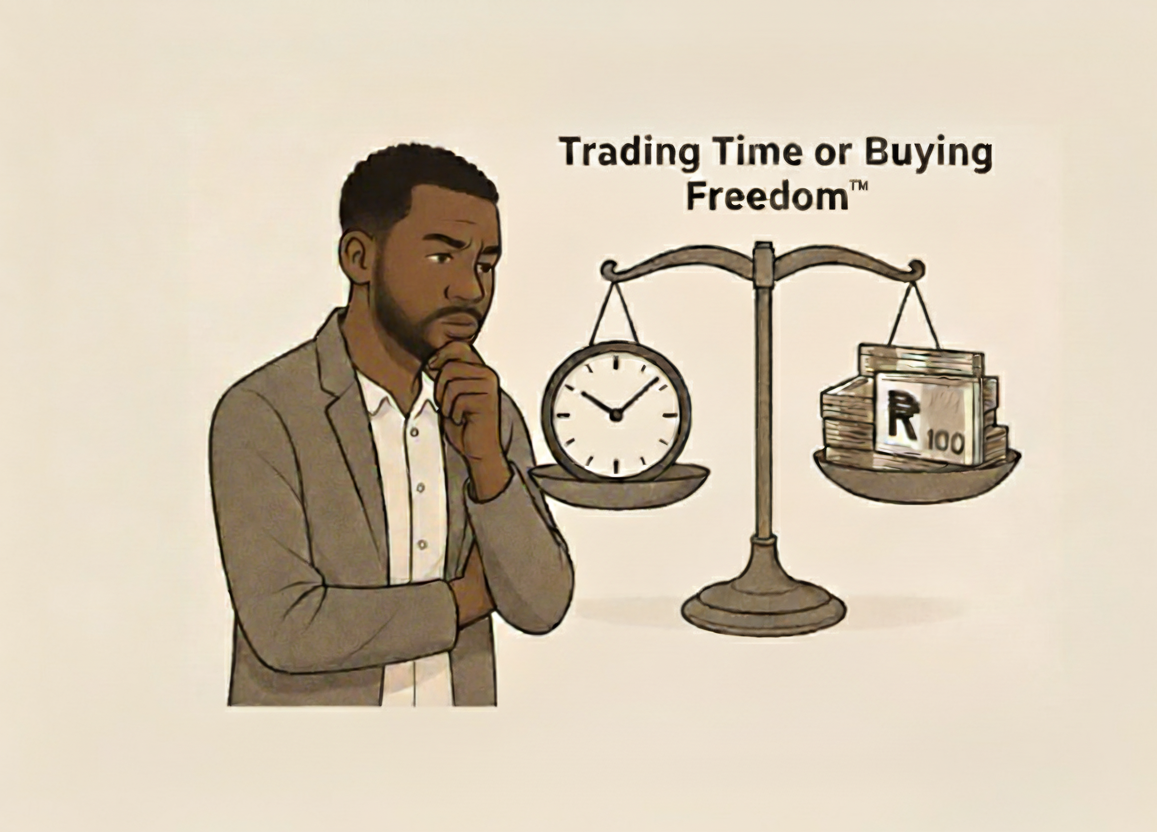
You are your own personal CFO

Perhaps the easiest and most effective way to start taking your personal finance management seriously is to think of yourself as your own Chief Financial Officer (CFO).
If we approach our money management this way, we begin to operate almost like a business. Actually, it’s even better to run your life like your own Chief Executive Officer (CEO) because if you focus only on being a CFO, you might end up obsessing over money and neglecting other important areas of life.
Most businesses crumble without proper direction, vision, goals, and objectives. Since running a business involves many moving parts, personal financial management can also be approached the same way.
Remember the famous saying: “Failing to plan is planning to fail.”
If you live your life without a plan whether it leads to failure or success how can you tell the difference? It becomes a guessing game. Unfortunately, most people live their lives this way.
Thank God you and I have finally woken up and are ready to start sailing. You are the captain, my friend. I’ll give you some tips it’s not that complicated. Actual ocean sailing is complicated, though, but financial sailing toward financial independence is practical and doable.
The captain of the ship

In figurative terms, the company’s CEO is the captain of the ship 🚢.
If you’re the CEO, you’d better know how to sail and, most importantly, understand the ocean figuratively, of course. No need to wear sailor’s pants! I’m talking about personal finance management.
Unfortunately, many people delegate their leadership role to a professional financial advisor. Even if you use one, remember: you are still the boss. The financial advisor becomes the CFO and reports to you, the person behind the wheel.
Money management is about life, not just money
Personal finance management encompasses more than just money. We need to approach it holistically. Otherwise, we focus on money alone and miss out on life.
In simple terms, personal financial management is about life and money particularly money that’s saved and invested.
“Life” here refers to your personal life goals related to money management spending, saving, investing, estate planning, insurance, and retirement.
The roles and responsibilities of a CEO involve planning, strategizing, and ensuring those plans succeed. You can do the same for your personal finances just make sure you’re making a profit in the process, and financial independence will be within reach.
Meeting with yourself
Hey, you’ve made it! You’re ready to sail around the world, well done.
Now the real job begins. After reading this, schedule a meeting with yourself. This is where the rubber meets the road; it’s time for action. Create a workable personal plan enough talking, it’s time to act.
Is your business making a profit?
If you’re living from payday to payday and borrowing to fund your lifestyle, it’s time to make changes. The former isn’t working the company is underwater. Or should I say the boat? Since we’re sailing.
Run your life like a business
Key takeaway: Live way below your income and ensure you make a profit.
In business terms:
- Your salary is the gross profit.
- Your overheads are your everyday expenses.
- Your net profit is what you save and invest your seed money.
It’s this net profit, my friends, that buys you your freedom.
If you’re spending more than you earn, your business is running at a loss there’s no money left to buy financial independence.
Okay, if you’re running at a loss, it’s time to fire the CEO! 😃
Of course, you can’t actually fire yourself it’s your life, after all but you can start by cutting overheads, beginning with the CEO’s salary. No more endless restaurants and takeaways. The man in charge will be grounded until the business makes enough profit.
You’re both the CEO and CFO

The company’s CEO directs the day-to-day business including finance and strategic management to ensure the company moves in the right direction.
To succeed in personal finance, you must be good at both roles. From now on, you’re both the CEO and CFO no more lazing around.
You and I need both these skills for our personal enterprises to succeed and to cash in that net profit each month.
No magic required. Your personal enterprise should make a profit. Otherwise, it’s a futile exercise to wake up and go to work every day if you’re not making any profit might as well sleep all day!
The great debate: Earn more or spend less?
It’s one of the most debated topics in personal finance: earn more money or cut your expenses?
I’d say most of us struggle with money management. We should always have some savings in relation to our salary whether we earn more or less is secondary.
Sure, at times we need to increase our income, but only if we can manage what we already have.
It’s time for a serious meeting between the CEO and the CFO because this business is underwater if you can’t come up with some form of savings relative to your income.
Cutting expenses is low-hanging fruit something you can control now.
Of course, there’s no limit to what you can earn, but that lever takes time to pull.
Cutting costs, on the other hand, is relevant whether a business is profitable or not. It ensures healthy cash flow at all times.
It doesn’t matter how much you earn if expenses are left unchecked, all profits will vanish.
The CFO’s job: Cut waste ruthlessly
Massive tension: spend less or earn more.
Both are important, but true wealth is built by spending less than you earn.
It’s the CFO’s job (that’s you again) to see where you’ve been bleeding money and mercilessly cut those expenses.
Remember: saving is not deprivation it’s reprioritising funds toward what’s important to you. For us, that’s financial independence.
It’s not easy to initiate change, especially when it means giving up those takeouts or monthly clothing sprees that don’t serve your goals.
It’s the same clothes after all only trends change. Don’t let your wardrobe deny you financial independence.
No MBA required
If you’re worried that you didn’t do an MBA relax. No experience is required to be your own Chief Financial Officer.
You can learn on the job. There are plenty of resources out there all you need is dedication and curiosity to learn how money, savings, and investments work.
You don’t need to be perfect either even an 80/20 approach will bring success. Master 20% of money management, and the other 80% of results will follow.
But since we’re aiming for financial independence, we should master 100%. No waste enough is enough. Any waste is a waste of time, and we’ve had enough of that.
Final word
Disclaimer: It’s a full-time job 24/7, that’s the company policy!

However, once your money management is automated, you’re allowed to take a break and go hiking or play padel with your friends. Just remember it’ll cost you more to play padel than to hike. Don’t play padel every day!
If you don’t believe me, Google the price of a padel racket or shoes. Apparently, you can’t use running shoes for padel. Crazy, right? You’d think the same shoes would work.
Okay, my friend you’ve got a huge portfolio to look after: your life as well as your money.
Ensure your “corporate” makes money. Every month, use a portion of your income to buy investments, which, in time, will buy your freedom.
Keep at it, and soon you’ll be working from home with no boss to answer to because you’re truly your own Chief Financial Officer and Chief Executive Officer.
It’s okay wear both hats. You’re your own boss, after all.
Just don’t let your money boss you around. Instead, direct it where it should go and how it should be spent.
That’s it. It’s that simple. Control your money, or you’ll work for money all your life.
It’s a choice only you can make no board of directors involved.
Buy your own financial independence and live life on your terms because you’re the one in charge. You are your own boss.


 Trading Time or Buying Freedom
Leave a reply to Freeman Muswaka Cancel reply