You probably hear someone talk about financial freedom or financial independence. These terms are often used interchangeably. Both terms are rooted in the FIRE movement. Before you think I work for Ethekwini Fire Department, I mean:
Financial
Independence
Retire
Early
This is a movement of the personal finance nerds. Tired of the norm, you know the written script. Work for 40+ years and hopefully retire at some old age of 65 or 70. In South African lingo, these guys are the real Makoyas of personal finance. Optimization is their language and frugality their hobby. Don’t take frugality at face value; they are not cheap either. They just learn to be served by money rather than serving it. These guys studied the retirement system and realised it’s not an age game but a maths one.
What is the FIRE Movement? (And why SA “real Makoyas” are joining)
In basic terms, financial independence is reaching a point where your day job becomes optional. What this means is you could turn off your 4:30 am alarm long before the ripe age of 65. By this time, you have long invested in growth assets that can replace your salary. Tough luck for your boss; it’s time to log in to LinkedIn. You now have options.
Financial freedom can be defined as the milestone before FI, which is financial independence. The RE is optional and silent. I hear some people derive meaning from their day jobs only.
If this is you, no need to leave your job early. I hear corporate meeting presentations are fun, and they give you a warm, fuzzy feeling. Definitely not for me, I would rather do something else. I am not lazy, by the way, before you judge me. I know some people are hard on early retirement, just like Judge Judy is on some rude young man with no respect for the court of law.
If the idea of Fire didn’t exist, this blog you are reading would never have been discovered. I used the word discovered on purpose. There are plenty of hidden talents and gifts buried in your innermost, which will likely go with you to your grave if you make your day job your only purpose, while neglecting to discover these hidden treasures.
The math of freedom: Calculating your FI number in rands
Where do we go from here? We need a target North Star, or perhaps GPS coordinates for geographers like myself. That destination is, of course, financial independence, FI.
Let’s put it in numbers. Calculate your living expenses. Yes, if your monthly expenses are R30 000, multiply ✖️ 12 months. Boom, you have your annual expenses. Then again, multiply that number by ✖️ 25. The answer is your FI number.
Example of FI number
R30 000 ✖️ 12 months = R360, 000
R360,000 ✖️ 25 = R9 000 000. (Your target)
Using what’s called the 4% rule of thumb, you can technically pull 4% of living money from your assets for the foreseeable future. Since we live in South Africa, where inflation is high, we can use the 3% withdrawal rate. This is still super conservative, by the way; however, it implies that you have to multiply your annual expense by 33 to get to your FI number. Since most things come with caveats and other factors: the rate of return on your investment, investment fees, etc. Don’t worry about it all now. Remember, you can only eat the elephant one bite at a time. Just make sure you cook it first, be careful of foot and mouth disease.
Optimizing your Tax-Free Savings (TFSA) and Retirement Annuity (RA)
Now you have a target, let’s work backwards.
First, pay off high-interest debt. That includes your maxed credit card, so you need to create a room to invest the difference. With massive debt in sight, this journey is almost impossible, so kill debt, particularly high-interest consumer debt.
Once debt is settled, build an emergency fund. Murphy is lurking around your house.
Now, fun and games begin. Put that cash in a low-fee index fund or exchange-traded funds (ETFs). Forget about beating the market. The FI strategy is a set it and forget it. Automation becomes your superpower, and yes, living below your means. Beware of lifestyle inflation. Remember, there is an opportunity cost to every Rand you spend; that can also be used to buy your freedom. In South Africa, Tax Free Savings Accounts and Retirement Annuities are your first favourable buckets to grow your freedom fund. Just last week, the annual tax-free amount you could invest was increased from R36 000 to R46 000. That’s a very good deal, by the way, you can invest more money tax-free, don’t listen to some weird TikTok financial nonsense. Property investment can work, but it’s a bit complex since it comes with hidden baggage; your cash is locked in, maintenance costs, property taxes, etc.
The power of “FU Money”: Buying your freedom before you retire

Long before FI, you acquire what is known as “FU money”. If you feel your job is becoming intolerable, you can leave with peace. In short, this is how wealth is created slowly through investing. Invest over and above the 10%-15% of your net salary. This is just the minimum investment rate. To conquer the mountain of financial independence, you need to increase the investment rate, e.g., 30%, 40%, or even 50% if you are hardcore. Remember, it’s a math game, nothing else. The more you invest, the earlier you reach the destination; otherwise, you need 40 or more years if you follow the norm.
That’s it. No magic,
No tricks.
It’s buying your freedom one day at a time, often known as get rich slow
It’s just that simple.
Bigger picture, financial independence is not about escaping work but about designing a life you want. At times, it’s not about never working, but about working on your terms. This, my friends, is intentional living.
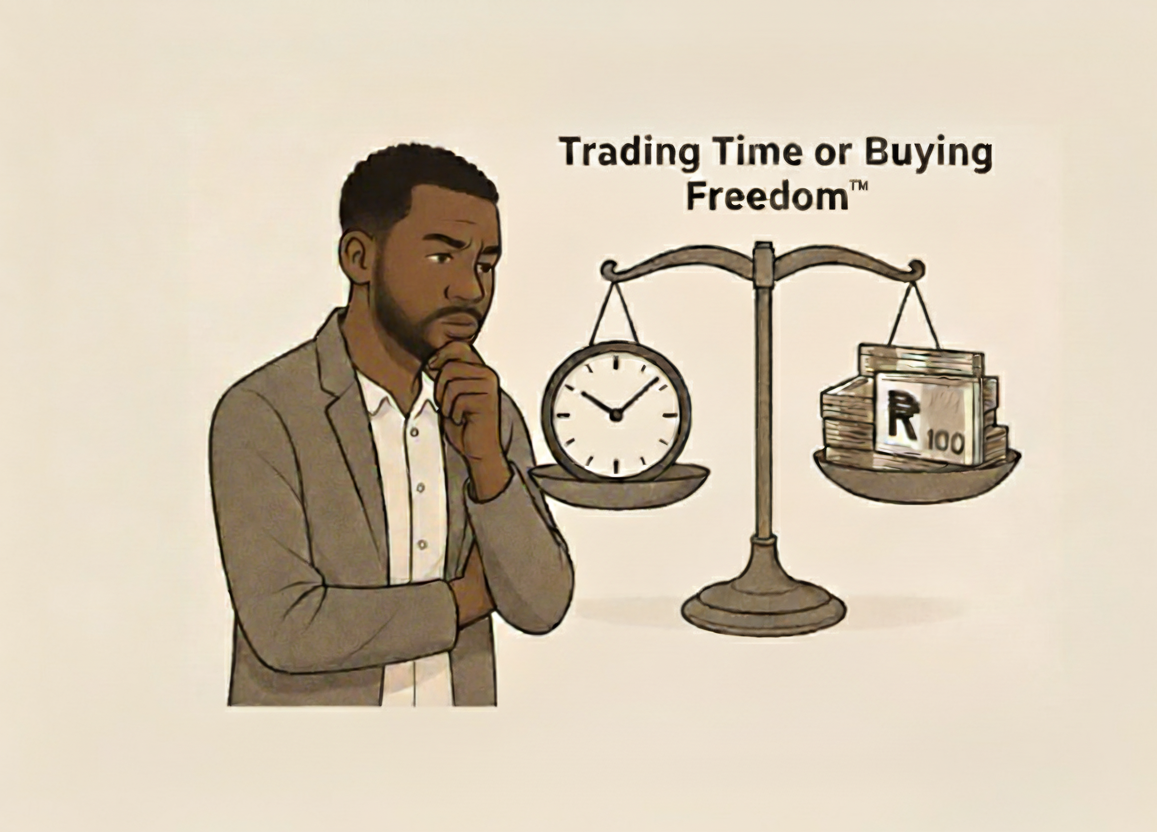
 Trading Time or Buying Freedom
Leave a comment