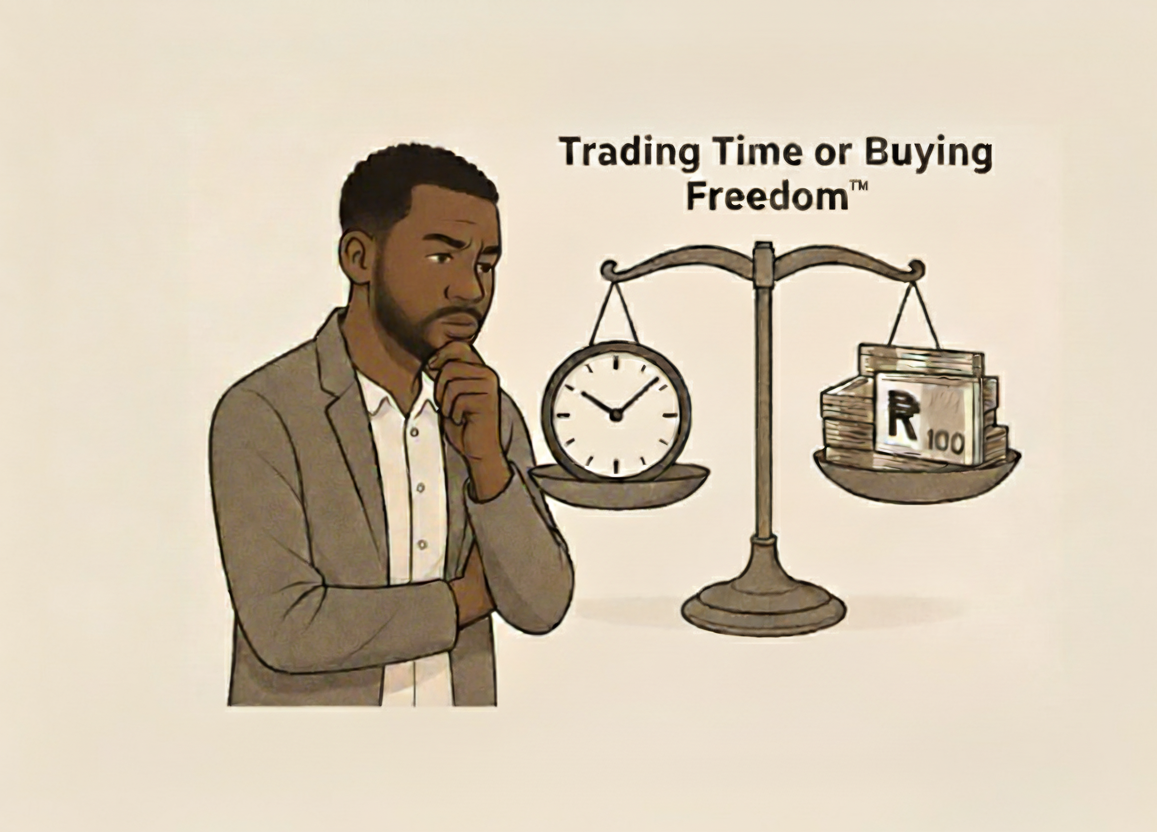

Spending money isn’t the problem; emotional spending is
Never spending money is not the goal, and if that’s your goal, it’s unattainable. You have already failed the test. Okay, I get it, most times we demonise spending money. Money has to be spent if you are still alive, but what and how you spend it are the bigger questions.
Your values should determine how you spend your money, not your emotions. I think we fall into trouble when we give our emotions more power than our values.
Is overspending really the issue, or a values crisis?
This, my friends, becomes a fascinating conversation.
What if our problem is not overspending, but a values crisis? If we can define our values, it becomes easier for our wallets to follow our values. Maybe, just maybe, we are trying to solve the wrong problem.
If time, freedom, and choice are your main values, then your spending habits should align with this. Think about it, it’s impossible not to spend money. If your money defines your values, you are in trouble, too. You need to do some soul searching: who are you? What is important to you? Then let your money follow those values. This could look like setting 30 percent to your freedom fund each month, which is being proactive and intentional.
Money is not just numbers
I know this all sounds philosophical, because it is. Maybe that’s our problem, we think money is pure numbers only. Behavioural finance studies show that personal finance is more complicated than we think, since emotions are a huge part of our spending.
My suggestion: bring values into the picture, and your personal finance management becomes more holistic and meaningful. No need to feel guilty about spending money most of the time.
The conversation then becomes: show me where your spending is, and I will show you your values.
Where your treasure is, your heart is also

Values define who we are, what we believe, and how we live our lives. This thinking is what the wise teacher in the ancient text meant when he said: Where your treasure is, there your heart will be also.
Not preaching here, by the way, only giving you a more rounded approach to life. Yes, life. The conversation about money, how we spend it, use it, save it, or invest it, is about life. This thinking challenges seeing money as a commodity and instead sees it as part of our lives.
Why avoiding money conversations doesn’t work

No need to shy away from money conversations. Ignoring this sensitive topic is not the solution. It’s like trying to live life while avoiding conflict; it actually creates more conflict in the avoidance process.
To be successful with our personal finances and the management of money, we have to be willing to challenge whatever we know, or think we know, about money. This reasoning encourages growth.
Your relationship with money matters big time

Money is more than the R100 note in your wallet or the maxed-out credit card you are battling to pay. It’s more about your feelings and your relationship with money itself.
Okay, it’s not about what we do, but why we do what we do. Why we spend more than we save or invest is a harder question to answer than what we spend that money on.
Let me be more practical: your alcoholic beverage of choice is not the issue, or even how often you drink, but rather why you drink in the first place.
Values, habits, and honest self-reflection
These are not judgment questions, my friend, but honest self-reflection. If your relationship with money is grey and you are unaware of why you do the things you do, I can bash you with budgets, money talks, and spreadsheets, it will be ineffective.
There is nothing unique about money conversations. Anything to do with our habits and behaviour in life stems from our values.
Living with intention, not by chance
So, the key questions should be about our values and what is important to us, and how those values relate to our money, life, and other important areas like our health.
If your values are unknown to you, you live your life by chance and will be swayed by others, advertising, and the media. It’s hard to resist the marketing tsunami of modern times if your values are not stated and defined.
This is why our emotions take such a strong hold over our money, our health, and ultimately our lives.
Homework from the intentional living friend

Here is your homework from the intentional living friend: search your heart. Who are you? What is important to you? What defines you? Hard questions, yes, but worth answering. Even searching for the answers helps.
Our money should follow our values, not the other way around. By doing so, we live each day with intention and promote value-based spending in how we use our money and our time, and other resources.
It is this mindset that ensures true freedom and financial independence and a life lived with intention.
 Trading Time or Buying Freedom
Leave a comment