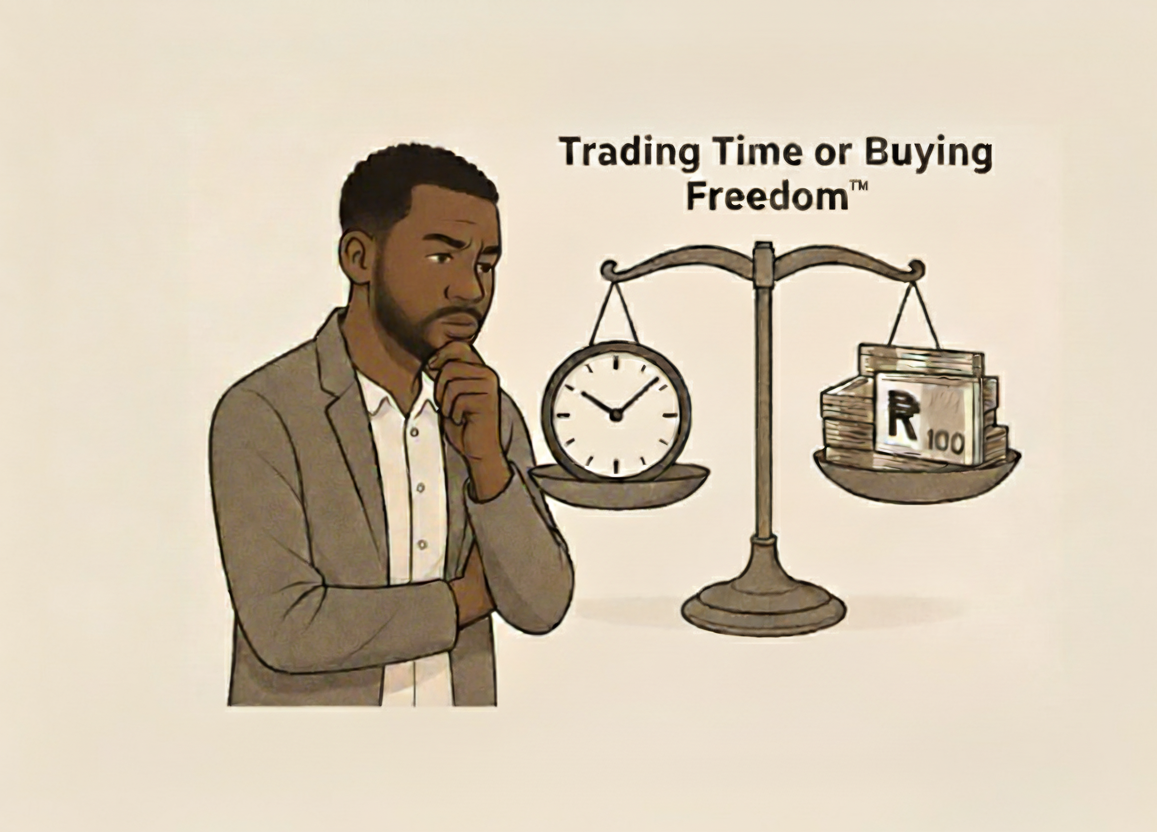

Making sense of personal finance one biscuit at a time.
When you learn about personal finance, the terminology can often feel as though you’ve enrolled in a boring accounting class. So, let’s spice things up with my Choice Assorted version – simple, fun, and seasoned with a little South African flavour. Who doesn’t know these famous cookies? Let’s break down the big words, one biscuit at a time.
💸Your money in & out
Salary
Money you are paid in exchange for your time and effort. Often never enough!
Savings
Putting aside money instead of fish and chips on Friday, you settle for samp & beans. Your future self-thanks you.
Instant Gratification
“I want it now!” No discipline to wait, basically behaving like a toddler with your finances. Careful, the debt monster will give you a hiding if this is you. Please wait for your pudding; no need to eat dessert before the main course.
📈 Growing your money (investing basics)

Investing
Putting your money to work by buying assets or investments. Don’t confuse this with sports betting or the lottery; those don’t count as investments.
Share/ Stocks (Equities)
A small unit of a publicly traded company, a small piece of the actual business, is a tiny share of the pie. Good idea to own real companies and get rewarded as those businesses make money over time.
Exchange-Traded Funds (ETFs)
Small pieces of actual companies are bundled in a passive fund basket tracking the market. Examples: JSE 40 ETF and S&P 500 ETF. Like Choice Assorted biscuits, different colours, sizes, shapes, but all taste good.
Unit Trusts
An investment scheme where investors pool money together. Alternative to ETFs, but watch out for high fees, which can be higher than their ETF cousins.
Bonds
You lend money to the government or cooperatives, and they pay you interest on fixed terms. Less volatile than shares. Not only for old folks, can it help you sleep better at night without sleeping tablets.
Cryptocurrency
A digital alternative form of payment secured by encrypted algorithms. Yes, confusing and speculative. It’s gaining momentum, but don’t go crazy; keep most of your wealth in secure asset classes.
Diversification
Holding different asset classes across regions or industries. Don’t keep your eggs in one basket unless they’re boiled! Otherwise, they might rattle, break, and you could lose them.
💡 How to protect yourself while growing wealth

Emergency Fund
Cash for emergencies because Murphy will knock at your door anytime, a car breakdown, retrenchment, or a terrible work environment. The extended version is affectionately known as FU money in the FIRE movement no need to say the full word. Powerful money to have, though.
Investment Fees
Often shown as a percentage, small bits and pieces that add up. A 3% annual fee? Run away if your legs are still working! Even a 1% increase in fees might seem small, but when compounded over time, it’s substantial.
🧾The things every adult should know
Savings Rate
The percentage of your money you save or invest every month. From your loaf of bread, how many slices count for tomorrow, next week, and five years from now? I get it; bread goes stale, but money doesn’t.
Example:
Net salary R20,000
Saving R2,000
Savings rate = (2,000 ÷ 20,000) × 100 = 10%
Low, but better than nothing. Push it up! If you need financial independence ASAP.
Net Worth
Everything you own minus everything you owe, assets minus liabilities. Your golf clubs are not assets. Your car? Don’t get me started. Net worth, not your big salary, is a measure of your wealth.
Asset Classes
Different investable assets: cash, bonds, property, crypto, gold, etc. Copper pipes in your house are not assets, but gold is. Join me on a Jozi exploration! (Just kidding, I’m not into mining. Yes, I own a pick and a big hammer only for household use.)
🛡️Tax wrappers for smart South Africans
Tax-Free Savings Account (TFSA)
An investment account set up by the South African government to encourage people to save. Free lunch from SARS, no capital gains tax, no dividends tax. Just bring your drinks to the party.
Retirement Annuity (RA)
A retirement fund where your investments grow tax-efficiently. You pay tax only when retired. Another no-brainer, a delayed tax and lowers your income tax now. Don’t pull from the savings pot; the 3 pots are still cooking: Savings, Vested, and Retirement pots.
Provident Fund
Employer-funded retirement fund, similar to RA and regulated under Regulation 28. It’s your future money; don’t withdraw it for holidays. Your future self will never forgive you if you do.
💎The cool kids concepts
Compound Interest
Interest earned on interest. This math only works with time, discipline, consistency and patience, the snowball effect. Push that snowball uphill first before it rolls downhill. That’s why people say the first R100k is the hardest.
Dividends
Profit companies pay shareholders. Known as passive income, money earned while you sleep. But it doesn’t start with sleeping! Save and invest first, then sleep and earn dividends.
💡 More essentials
Budgeting
A blueprint of how you will spend and save money monthly. Instead of sleepwalking through your finances, you need this plan for intentional living and financial independence.
Inflation
The rise in prices of goods and services over time as money loses value. That Steers hamburger costs more each year! Keeping cash under your mattress is not a good idea; invest in inflation-beating assets like equities, bonds, and property.
Interest Rates
The cost of borrowing money. This is why home loans and credit cards cost more over time. Paying high interest on debt repayment is the quickest way to be poor, so don’t phone mashonisa (loan sharks) for a loan!
Credit Score
Your financial reputation, how easily and cheaply you can borrow money. A higher score is better. But don’t obsess over it; obsess over saving and investing instead, which grows wealth.
Liquidity
How quickly your assets can be converted into cash. Emergency funds = liquid cash. Your house? Not liquid since you can’t sell it tomorrow for a medical bill.
Risk Tolerance
Your comfort during market ups and downs. Can you sleep well when your portfolio drops 30%? Knowing this helps avoid panic selling and losing money. Potential higher returns come with higher risk that’s the nature of life, no sweat no gain.
Asset Allocation
How your money is divided among equities, bonds, cash, property, crypto, etc. More important than picking a single company like Nvidia.
Dollar Cost Averaging
Investing the same amount regularly, no matter if markets are up or down. For us, Rand Cost Averaging, come on, set that debit order monthly and keep piling cash into ETFs. Ignore market noise!
Pay Yourself First
Save and invest before spending on anything else. Buy investments before groceries. If cash is tight after investing, eat rice and beans. I grew up on rice and beans and am healthy!
Lifestyle Creep
When expenses rise with income. Master living below your means; it’s a real superpower to build wealth. If you earn R20,000 but spend R35,000, your house is on fire. Call the fire brigade today; in fact, you should have phoned them yesterday.
Capital Gains
Profit from selling investments. SARS takes its share too; big brother always wants a slice of your sandwich, like it or not no discussions.
Volatility
The ups and downs of the stock market, often reported by BizNews. It’s the nature of the market; it’s the nature of the rollercoaster ride to go up and down, no need to be surprised. Don’t jump in and out; fasten the belt and enjoy the ride!
🏁The big destination: Financial independence
Financial Independence (FI)
The point when your investments cover your living expenses no longer needing your 9–5 salary. The crossover point. A cool place where you can ignore the annoying morning alarm.
Financial independence number calculation (FI Number)
Your annual living expenses × 25 = the amount you need invested.
Example:
R20,000/month × 12 × 25 = R6,000,000
That’s your FI number to aim for.
FIRE MOVEMENT Financial Independence Retire Early. It’s a movement of smart, intentional, independent people who use their money to buy their freedom, which is their TIME.
These people are contrarian in thinking; they don’t follow the herd no need to retire when you are 65. Just by being intentional, you can speed up this process and also buy yourself options, choices, and freedom to do other cool things than to be stuck in your 9-5 for 40 plus years.
Before we talk about freedom…
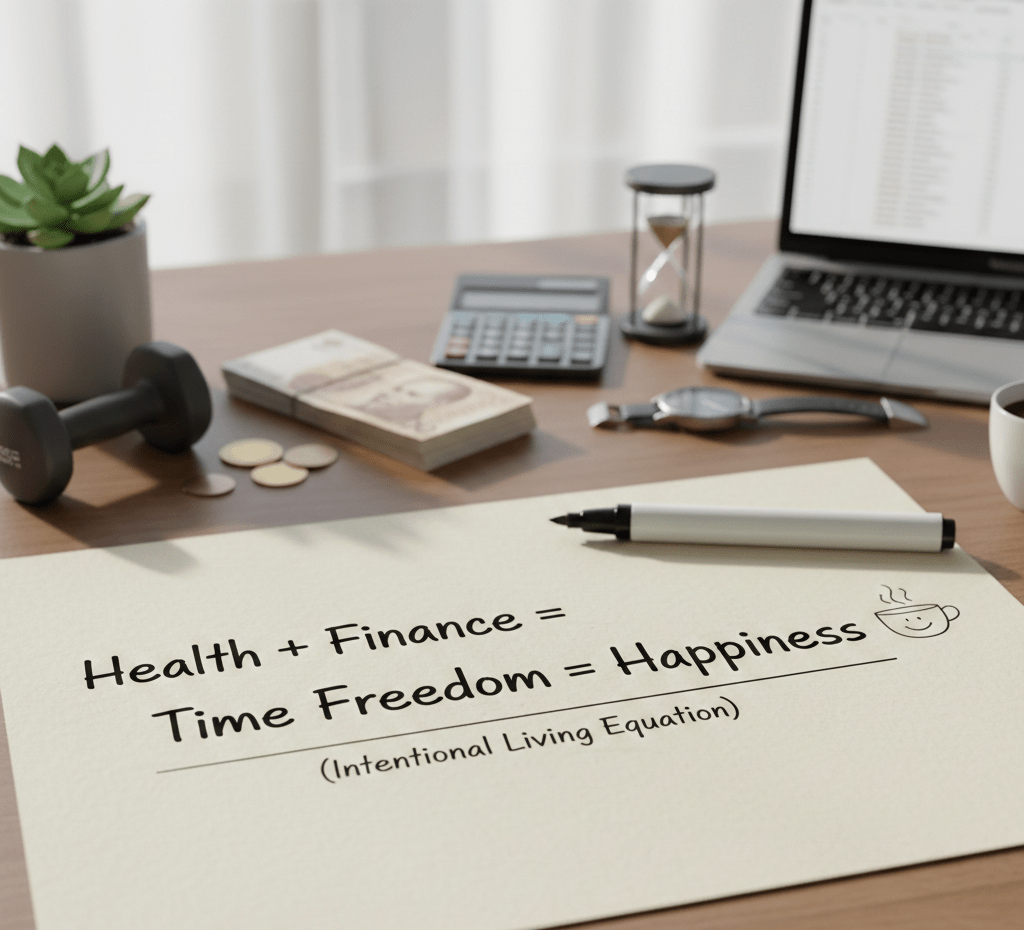
Since happiness is our goal, intentional living becomes a prerequisite. If intentionality is part of the equation, good money management is an everyday exercise. Our daily dealings with money can therefore afford us time freedom or hinder it. And remember: health is our greatest investment; don’t neglect it.
So, financial independence matters, and the journey matters too. Everything you’ve learned above is really about building a life full of options and choices, one intentional step at a time.
 Trading Time or Buying Freedom
Leave a comment