How many times have you gotten into a store looking for one item and left with more than you came for?
The other day, I walked into a store to buy mushrooms. As I entered, I suddenly saw bright yellow bananas I grabbed them. Then I walked the other aisle, saw dark chocolate, and thought, “R89 won’t break the bank.” I walked to the next aisle and thought, I should get pork sausages since they are on promotion. Then I thought, “Chilly today I’d better grab a bag of firewood.” Then I suddenly remembered I’d need firelighters for the fire.
Before I knew it, I had spent R500… and walked out without the mushrooms I was there for in the first place.
Sounds familiar?
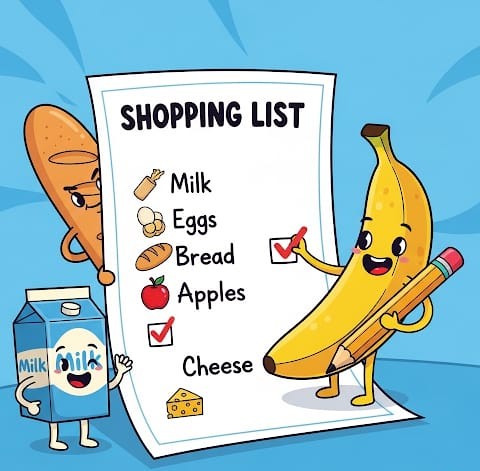
That’s why you and I should shop with a shopping list.
Retail stores are designed to make you spend more money
The entire retail space is designed with you in mind, with very little for your good. Ensuring you spend more than you need to in the first place.
From colours, lights, and the arrangement of the merchandise, everything is screaming “Buy me!” as you walk about. This is the same reason why it’s not recommended to shop while tired or hungry.
Someone has studied what colours make us tick, what music will calm you, and possibly even help you chill out and spend more. It’s more like someone zombifying you, if that’s even a term, to just aimlessly pick things, go and pay for them, and later ask yourself, “What was happening?”
Ever bought something fresh like meat or yogurt without checking the dates, only to find out at home that the item has passed the sell-by date? That’s the retail zombification; it confused you, and you were not concentrating at all.
Use a shopping list to outsmart the retail system
In order to beat these genius marketers, arm yourself with a good old shopping list. I often see the old ladies with their shopping lists. They learnt the hard way, and now they won’t just shop aimlessly without any plan; they learn from the wisdom of the old.
If you and I can somehow master this old-age technique, we can save ourselves money and time.
The basket or trolley isn’t the problem

Some folks ignore shopping baskets or trolleys, thinking they’ll end up shopping less if they don’t use them, tried that before, only to walk out with hands and arms full of groceries they didn’t plan to buy in the first place.
The reason leaving the basket or trolley doesn’t work is that the issue is not the basket or the trolley; it’s your brain, pity you can’t leave your brain at home.
Plan your list at home
Plan your list while you are still at home, and you can save yourself a lot of money and time. Food is one of those things that is expensive, although we often ignore the reality of its impact on our ability to save and invest.
If you write your shopping list at home, you will also avoid the common mistake I often make: buying onions or yoghurt only to find out you had the same product unused, still sitting in the fridge or pantry. That’s right, do a pantry and fridge audit first.
That’s why we need to write our shopping list at home and check all the corners of the fridge and pantry before writing something on the list.
Please don’t call me weird. I am just trying to be more intentional, and I hate food waste, let alone money waste.
Shops are financial landmines if you are without discipline
Going to the shopping mall or grocery store these days is deadly financially, particularly if you don’t have self-discipline. It’s very easy to buy something rather than not to.
When you stand in the shop without a list, your brain convinces you to buy something, and most of the time you do.
One of my weird rules is to have a list and stick to it, instead of adding more to the list while in the shop, I will remove one or two items and see if I can manage without them.
Modern life lacks planning
All I am saying is modern people are more instant-driven, and we sure lack planning.
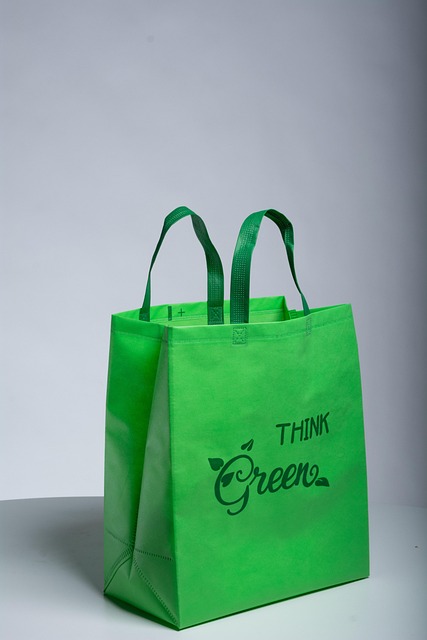
Ever spent money on new shopping bags every time you do grocery shopping, while your cupboard is overflowing with reusable shopping bags?
Most people are caught this way; they reason to themselves, “It’s only a shopping bag.” But some of those bags are R6 each. Imagine spending an extra R24 on bags you already have at your house, taking up space anyway. If, for example, you shop once a week, that’s R96 per month and R1152 per year going to waste
I’ve gone crazy with shopping bags; I have some in my car, some in my work bag, and some in my office. That’s how I get weird at times.
Why should I spend more on bags every shopping trip? I am now allergic to buying shopping bags.
If all has failed, let’s say I completely forget the reusable shopping bag, I will resort to carrying loose grocery items in the trolley and placing them in cardboard boxes, always in my car boot. This is finally my last option to avoid buying shopping bags, as I already have them at home.
These are my weird techniques. I’m not saying you should do the same, but just be mindful of the things you do, and don’t aimlessly spend money without thinking about it.
Intentional Shopping = Financial Freedom
Since you and I must spend money on food, groceries, and food., we might as well be mindful and intentional about it. Otherwise, we let these marketers control us like their robots.
Come on, let’s make them work for their money; no more free lunches going forward.
Plan ahead of time and be organized. Don’t perpetuate impulse buying, that’s a fancy retail word meaning shopping without thinking.
This is the exact term that inspires sweets and snacks to be placed closer to the checkout, so while waiting to pay, you pick those snacks without thinking.
Even the cashier is trained to upsell
In some stores, while you’re paying, a cashier might ask, “Have you got everything you need? Do you need airtime?”
You might think, “What a sweet, helpful soul.”
Don’t be fooled, it’s the same old plan to make you spend extra.
Final word: Every rand counts
Be smart, arm yourself with a shopping list, and stick to it. You might just be surprised how this can save you money and time, your most valuable asset.
Remember: every rand counts. What’s saved today can join in and work for you tomorrow and speed your journey to financial freedom.
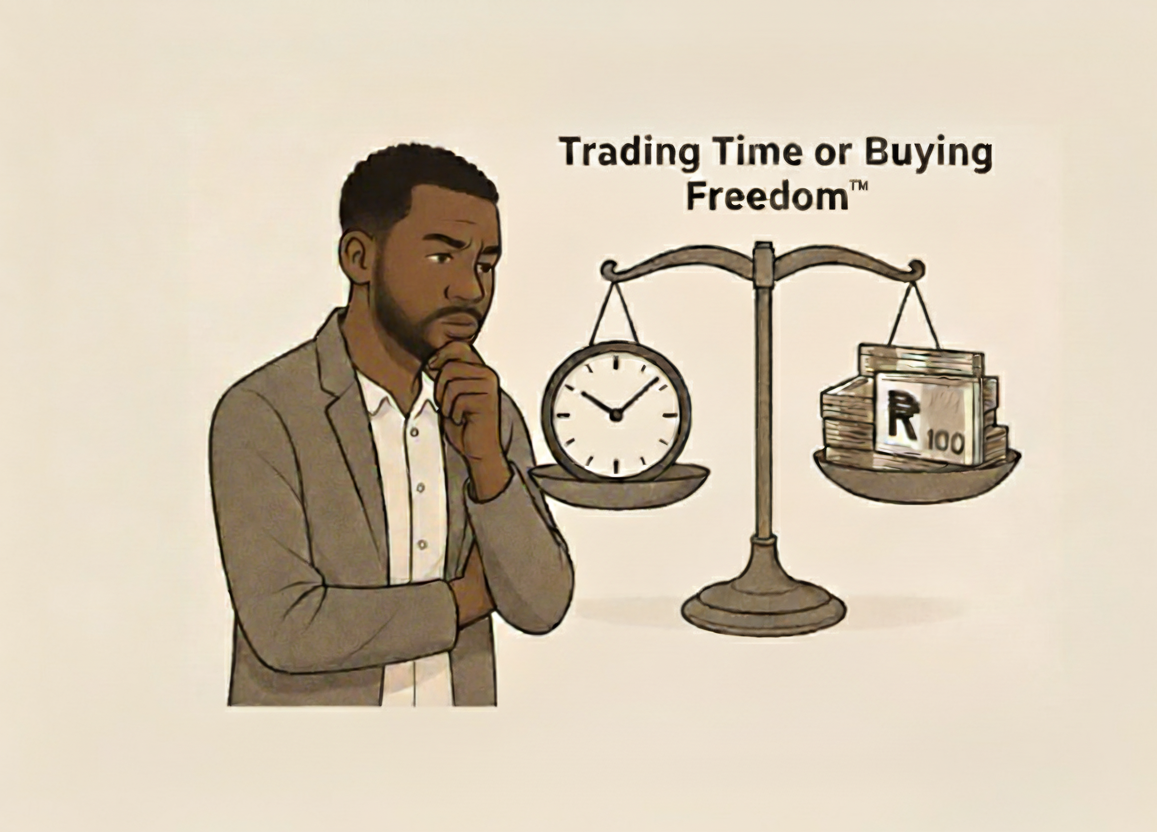
 Trading Time or Buying Freedom
Leave a comment