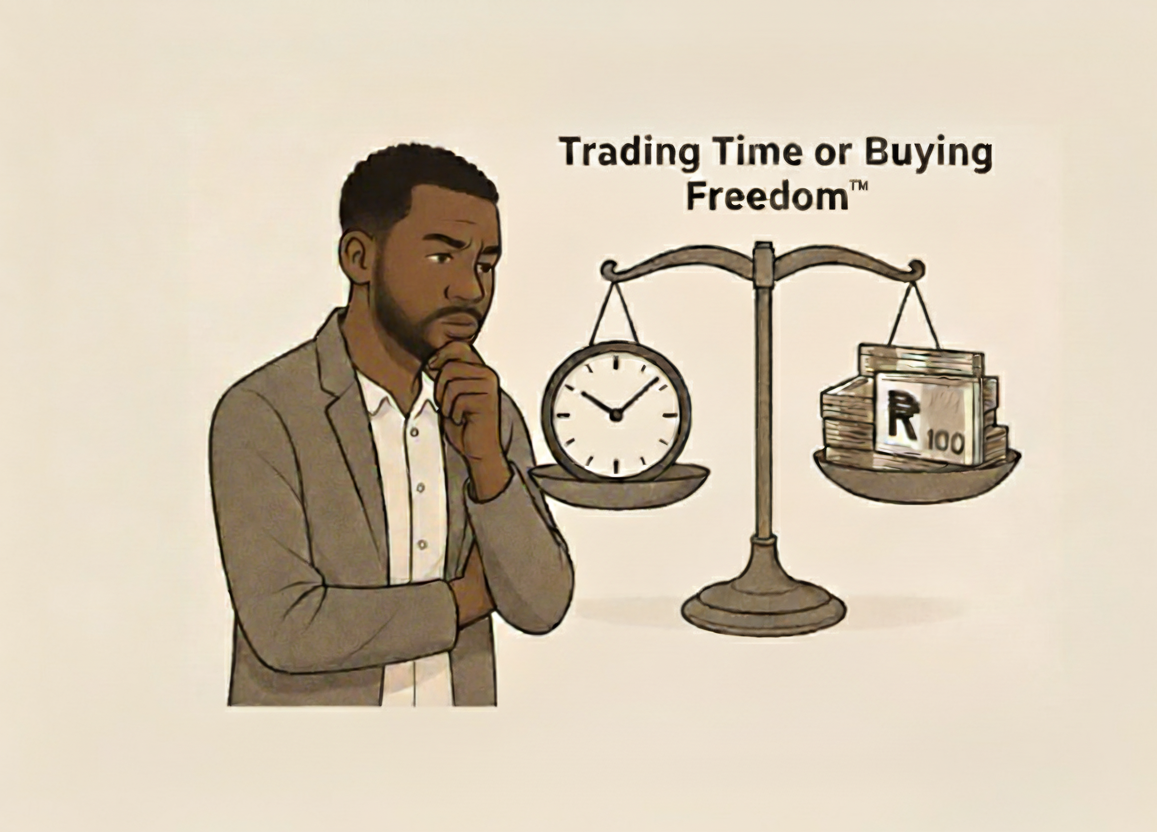

What are you doing with your money?
So, what do you do with the money you earn? Easy, you can spend it you could buy new shoes or eat out, or even holiday. All these are cool ideas, but there is much more one can do with their money. You could put a portion of your money in the bank or hide it under the mattress or couch, sounds clever, right?
Not so there is a mysterious invisible creature that can see your cash under the mattress and in a normal bank account, and slowly eat it away. This mysterious, invisible creature 👽 is called inflation, and it slowly reduces the value of your money over time.
In the ancient book, the Bible, there is a dude who chose to bury his talent. You can do that with your cash and miss out in the long run, or rather, put your money to work.
Putting your money to work

To beat this mysterious dude, we need to put our money to work, which is investing in simple financial terms. It simply means you make your money work to earn more money, instead of only spending your money on everyday consumption and other liabilities. If you are serious about freedom, investing should be a priority, not optional.
There are various investment products out there, the easiest and most effective for normal people like you and me is the stock market buying small pieces of publicly traded companies. How cool is that 😎, so you and I can own a small piece of a real business, and in time, we can earn profits and interest from those assets. These are income-generating assets.
Remember to secure your finances you want to buy assets, not liabilities, like fancy toys for adults. I am referring to cars and smart gadgets, you know, those things.
There are many ways of investing, e.g., property, starting businesses, but for me, the sure and easy way to build your wealth with little to no effort is long-term stock market investing.
Most people don’t actually realise that by saving for their retirement funds like pension funds and provident funds through their employers, they are already investors in a small way.
In simple terms, when you invest in the stock market through ETFs (Exchange Traded Funds), Unit Trusts, etc., you are purchasing small portions of actual businesses and hopefully, get rewarded over time as those businesses succeed and make profits.
Take ownership of your future
Although most people can contribute to retirement pension funds, etc., it’s another level to take matters into your own hands and create your side wallet investment outside of your employer situation. This is pretty darn good taking ownership of your financial future, as the best person to look after yourself is no other than you.
JL Collins, author of Simple Path to Wealth, often likes to say that owning small pieces of publicly traded companies means everyone in those businesses, from the sales guy to the CEO, is working hard every single day to make you rich while you are sleeping.
It’s like riding a bike in a slipstream although you will be funding those investments every month, it’s much easier to be in the peloton than to ride in the breakaway on your own. If you are a marathon runner, ask them whether it’s easy to motivate yourself on your own or to run in the Comrades ultra Marathon in a bus. These “buses” are a group of runners that run the same pace and are led by the bus conductor, who knows the suitable pace.
Okay, enough of the sports analogy. Let’s get back to investing.
Start with what you have
I personally suggest one begin by buying ETFs, unit trusts, and index funds. These are low-cost vehicles that track the stock market index and require little effort. I said suggest, as I am not a financial adviser but an aspiring personal finance educator take my suggestion as education.
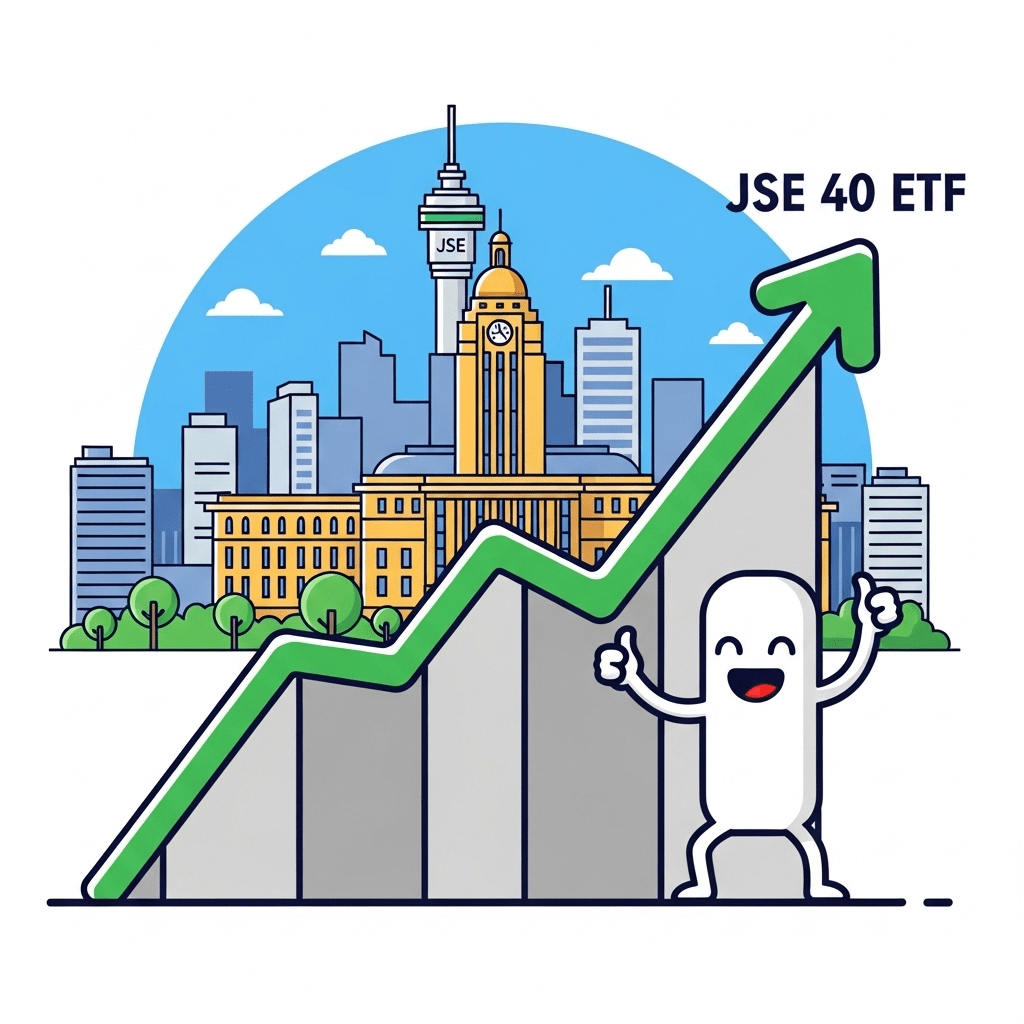
For a start, buy yourself the Johannesburg Stock Exchange JSE 40 ETF, which is technically the top 40 publicly traded companies in South Africa. So owning small pieces of the top 40 traded companies on the South African stock market is much safer than buying individual stocks of a single company. I would rather put my bat on 40 companies than 1 single company.
Remember, stock markets always go up and down this is known as volatility. This is the noise that’s often reported on business news on TV or radio. However, if you are a long-time investor, you need to be prepared to stay the course and view this as a marathon, not a sprint. There are many studies that show that the value of the stock market always goes up over long periods.
Being in the stock market is a long game 10, 20, even 30 years. Please don’t confuse long-term stock investing with stock trading, which is short-term in nature and often speculative and luck-focused.
One can become successful as a trader, but it is very difficult and requires lots of work and luck. It’s like taking on the Comrades Marathon without proper training you can make it, but it’s sure hard and painful. Is it easy to run Comrades after proper training? Not at all, but it’s by far better than taking on 90km without any preparation.
Investing requires discipline and perseverance to set that debit order each month and contribute whether the market is up or down. If you are serious about creating options for yourself and choices, you have to discipline yourself to contribute to investments each and every month.
One can invest as little as R500 per month into an ETF. The entry level is low no excuses here.
Lessons from the village
The earliest I can relate to investing was the way I grew up. I was raised in a rural farming village where farming was everything in order to put food on the table. While investing needs to be funded by your monthly salary, our planting seeds had to come from each year’s harvest. One had to look after their harvest and preserve the portion for planting next season. If you eat all your harvest, you won’t have seeds to plant come planting season.
Our farming didn’t rely on irrigation, but it was your duty to plant once it was time for planting and leave the rest to God to send the rain to water for you. It was a set-it-and-forget-it strategy that was successful year by year. This is often how I think of index investing.
Check out this book: The Simple Path to Wealth by JL Collins. It’s written from an American context, but the wisdom in this book works in most parts of the world, including South Africa.
Don’t bury your gold
Let’s go back to the ancient text parable of the talents. A talent was worth 20 years of a day labourer’s wage this was great wealth that each person was trusted with according to their abilities. The first dude who had received 5 bags of gold invested them and gained 5 more. The one with two did the same and gained two more. The last guy who had received 1 chose to bury it.
The moral of the story though talking about the kingdom of God can be likened to investing: being faithful with the little you earn each month, and soon you could gain more if you invest it.
Please don’t bury your cash; nothing good comes out of that. Put it to work. Mostly, it’s fear that prevents people from investing, just like the man who buried the one bag of gold. He was driven by fear, and he suffered as a result.
Rather than playing a defensive game with your money, be offensive and start investing today. This is the sure sign to buy your time back and create options and choices for your future self.
 Trading Time or Buying Freedom
Leave a comment