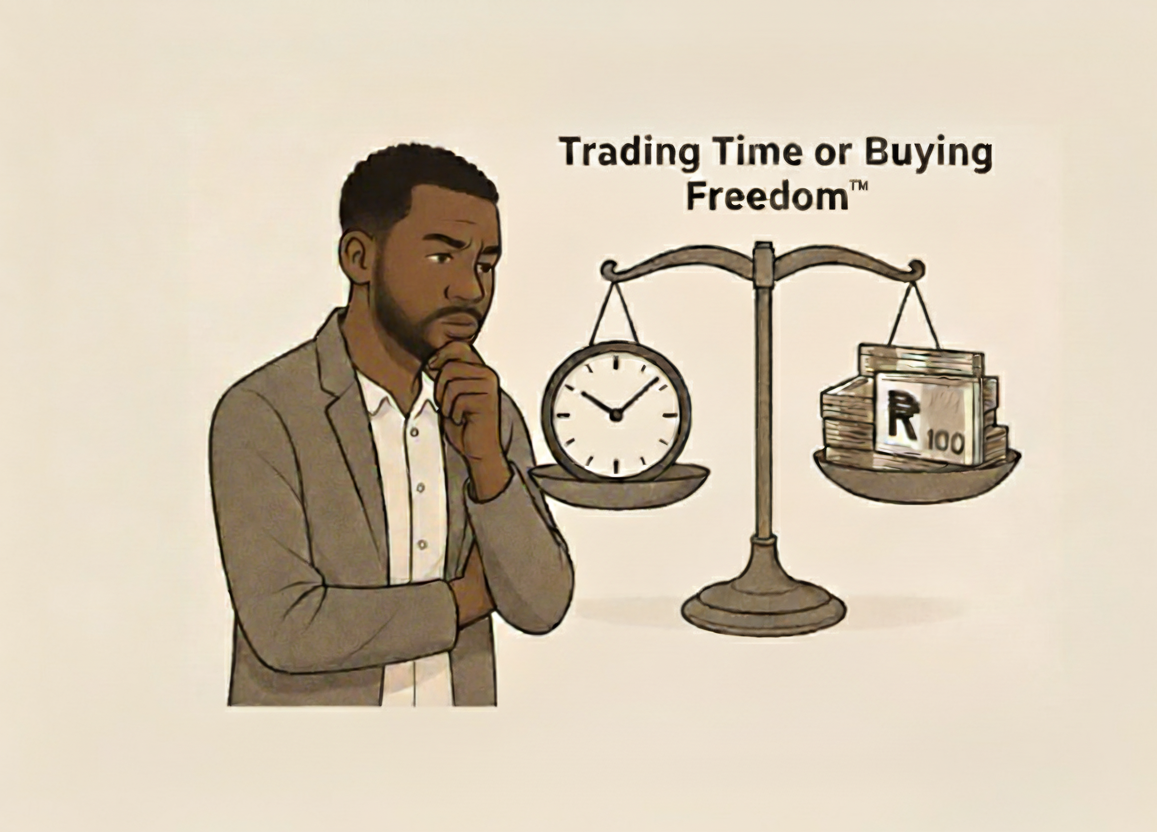
I first came across this powerful question in the personal finance classic Your Money or Your Life by Vicki Robin and Joe Dominguez. It’s stuck with me ever since.
One of the most puzzling things about working life is how we’ve accepted that we must work five or six days a week and “get” just one or two days off. Here’s the deal: a year has 52 weeks, and for most people, around 50 of those weeks belong to an employer. That leaves just 2 weeks for yourself.
Let that sink in.
All of this, because of money.
Honestly, I struggle to accept this reality. Yet the majority of people take it as the natural way of life. But it raises a deeper question:
Do we truly own our time, or does money own it in the form of the hours we give away at work?
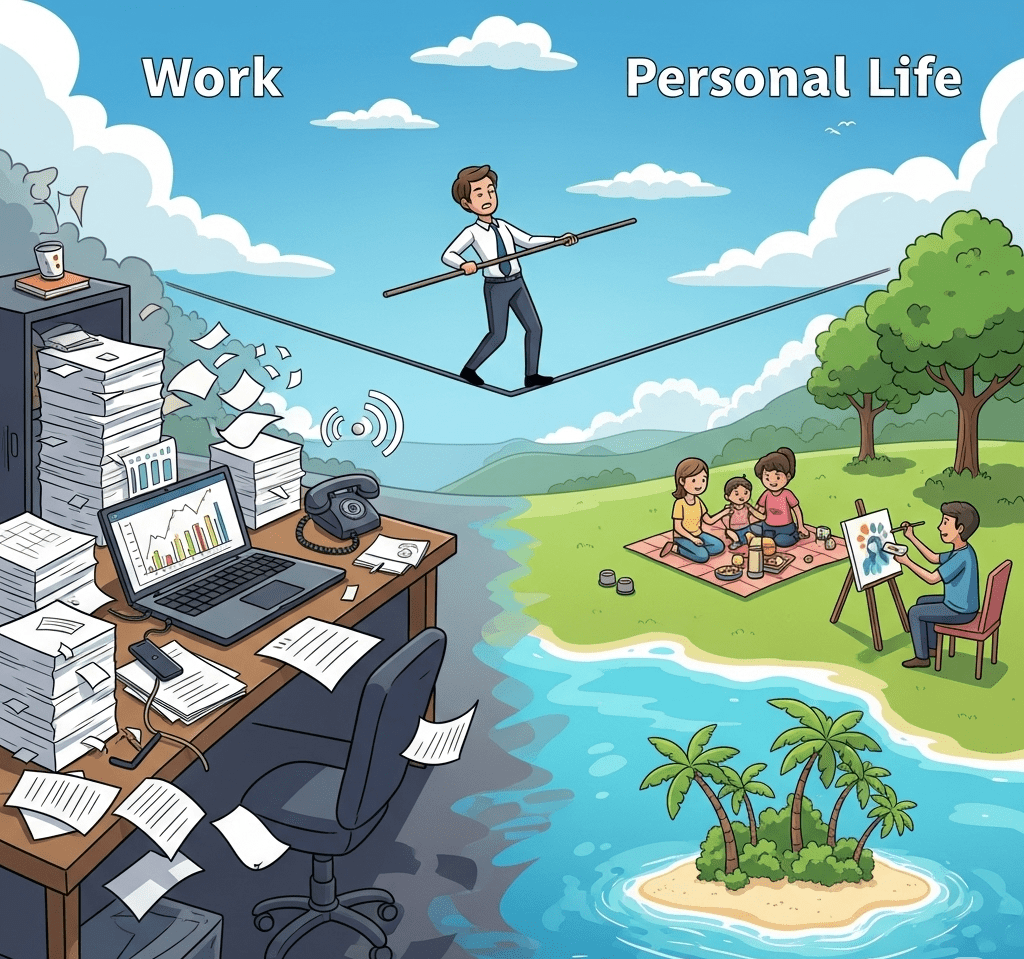
Let me be clear: I’m not anti-work. I’m simply trying to understand why so much of our lives is spent working, while other important areas like faith, relationships, family, and health often take a backseat.
If those areas are more important than money, why have we allowed money and work to dominate our lives?
The disturbing article
The other day, I read a finance article that left me disturbed. It pointed out the poor savings rate among South Africans and the reality that people are living longer. The author suggested that many South Africans should be prepared to work until the age of 80 before considering retirement.
And here’s the scary part the article suggested we should be grateful that we can work that long.
That messed with my mind.
There are so many things I’d rather do with my time than spend 50 years working. That’s not working for a living that’s living for work.
Of course, we need to work. But allocating 90% of our time to work feels completely out of balance. These are my opinions, and you’re welcome to see it differently after all, we’re talking about your life and your time.
What we can control
Life comes with plenty of things we can’t control: inflation, taxes, politics… the list goes on. But we often ignore the things we can control:
- How much we spend
- How much we save
- How we invest
- When we retire
It’s easy to debate things outside our control. But real power comes from focusing on the choices we can actually make.
So let me say this clearly:
You are in control.
You can choose to spend your full salary on consumption, or you can choose to use part of it to buy your freedom.
That’s what saving and investing are really about. It’s not just about getting rich (although that might happen). It’s about creating options and gaining back control over your time.
The farmer who ate his seeds
The principle is simple and old as time:
Live below your means.
Use the difference to save.
Use savings to invest.
Let investments buy your freedom.
If you’re a farmer who eats all his seeds, don’t be surprised when planting season arrives and you have nothing to plant.
Don’t say I didn’t warn you when you’re still working at 80 or worse, working until your last breath.
Take a small step today. Even if it’s small, it’s still progress.
A wake-up call from my son
Recently, I told my 7-year-old son that I was going on leave, on the same day his school closed for holidays. His response?
“Dad, Did you ask your boss for permission?”
That hit me hard.
Even my young son understood something I try to forget my time as an employee doesn’t truly belong to me. If I want to watch my son play sport or just be present for an important moment, I need to ask someone else for permission.
If they say no, I smile and carry on.
That moment reminded me why I save and invest.
Not for status. Not for luxury.
But to buy back my time.
Let’s stop following the broken script
Money is something we can control and that means we can design lives based on freedom and choice, not outdated scripts that expect us to work for 40+ years and promise us to only truly live at the very end of our lives.
Let’s stop living on autopilot.
Let’s start living intentionally.
Final thoughts
You have a choice:
Spend every Rand today and keep trading your time for money forever.
Or start buying your freedom, one small step at a time.
Because time is life, and it’s too precious to waste.

 Trading Time or Buying Freedom
Leave a comment